Hard Water in Peoria, AZ: Signs You Need a Water Treatment System
Arizona has some of the hardest water in the country. High levels of calcium and magnesium flow through your pipes, leaving destructive mineral deposits behind. These minerals damage appliances, clog plumbing, and dry out your skin.
Hard water in Arizona is a geological reality. The groundwater supply picks up heavy concentrations of dissolved limestone, calcium, and magnesium before it ever reaches your faucet. While safe to drink, this mineral-heavy water wreaks havoc on your home. Over time, scale buildup restricts water flow and forces appliances to work harder, severely shortening their lifespans.
Residents dealing with hard water in Peoria AZ face constant cleaning battles. Mineral deposits bond to glass, tile, and metal, requiring harsh chemicals to remove. At Pipes Plus, we help homeowners implement effective water treatment Peoria AZ solutions. Removing these minerals at the source extends the life of your plumbing and saves you money on early appliance replacements.
7 Signs Your Home Needs a Water Treatment System
You do not need a laboratory test to know if your home has hard water. The signs show up on your fixtures, in your laundry, and on your water bill. Arizona water sits well above the national average for hardness, meaning the effects compound quickly.
Catching these signs early prevents permanent damage to your plumbing infrastructure. Watch for these seven indicators that your home requires a water softening or filtration system.
Scale buildup leaves a chalky residue on showerheads and sink fixtures, reducing water flow.
Hard minerals strip natural oils from your body, leaving skin itchy and hair feeling coarse after a shower.
Minerals trap dirt in fabric fibers and prevent detergent from lathering properly. Clothes wear out faster and lose their color.
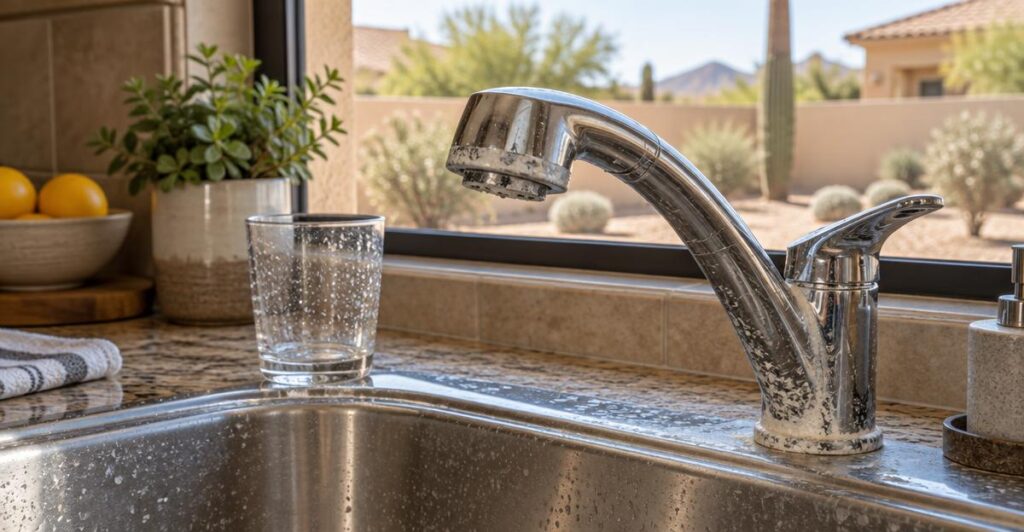
Your dishwasher cannot rinse away heavy calcium. Glasses come out with cloudy streaks and hard water spots.
Hard water reacts with soap to form a stubborn scum that coats your bathtubs, glass shower doors, and bathroom tiles.
Dishwashers and washing machines fail years early when calcium clogs their internal pumps and water intake valves.
Mineral deposits slowly choke the inside of your pipes. This restricts flow and creates noticeable drops in water pressure.
The Hidden Costs of Untreated Arizona Water
The visible signs of hard water are frustrating, but the invisible damage is much more expensive. Every time hard water heats up, the minerals separate and bake onto the internal components of your plumbing system. This process creates a solid layer of scale inside your pipes that grows thicker each year.
A heavily scaled pipe narrows over time, increasing the internal water pressure and stressing the joints. In severe cases, this leads to pinhole leaks or burst pipes behind walls. You pay for hard water through higher energy bills, extra cleaning supplies, and premature plumbing repairs.
Protecting your home starts with the right equipment. A professional plumbing assessment determines the exact hardness level of your water and matches it to a system built to handle that specific mineral makeup.
How Hard Water Destroys Your Appliances
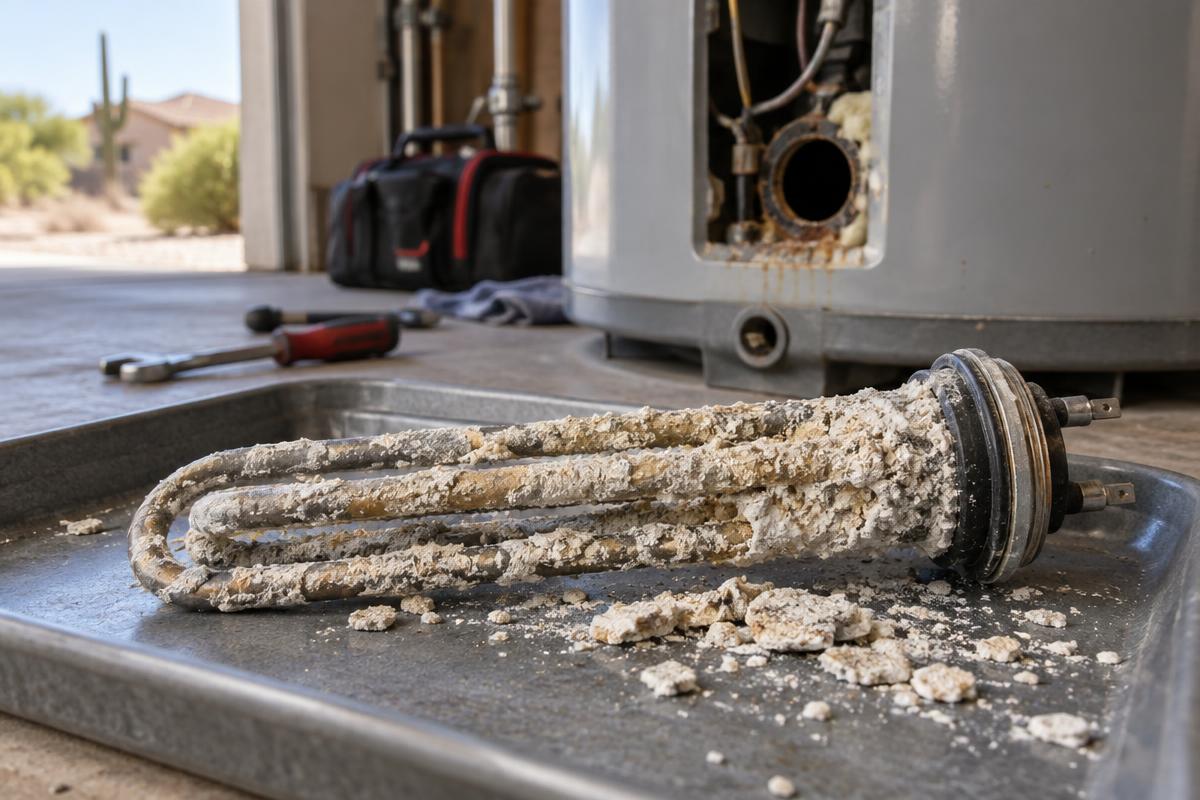
Appliances that use hot water take the most damage from hard minerals. Calcium carbonate precipitates out of the water much faster at high temperatures. This forms a rock-hard layer of scale directly on the heating elements inside your machines.
When scale coats a heating element, the appliance must heat the rock layer before it can heat the water. This forces your dishwasher and washing machine to burn more electricity. Eventually, the overheating element burns out completely, leaving you with an expensive repair bill or a useless appliance.
Why Hard Water Kills Water Heaters
Your water heater is the most expensive appliance threatened by hard water. As water sits in the tank and heats up, calcium and magnesium fall to the bottom. Over months and years, this creates a thick layer of sediment that separates the burner from the water.
This sediment traps heat at the bottom of the tank, causing the metal to warp and fracture. Traditional tank water heaters lose years off their lifespan, and tankless units clog entirely without regular professional descaling. A proper water treatment system prevents this sediment from forming, keeping your heater highly efficient and extending its operational life.
Choosing the Right Water Treatment System
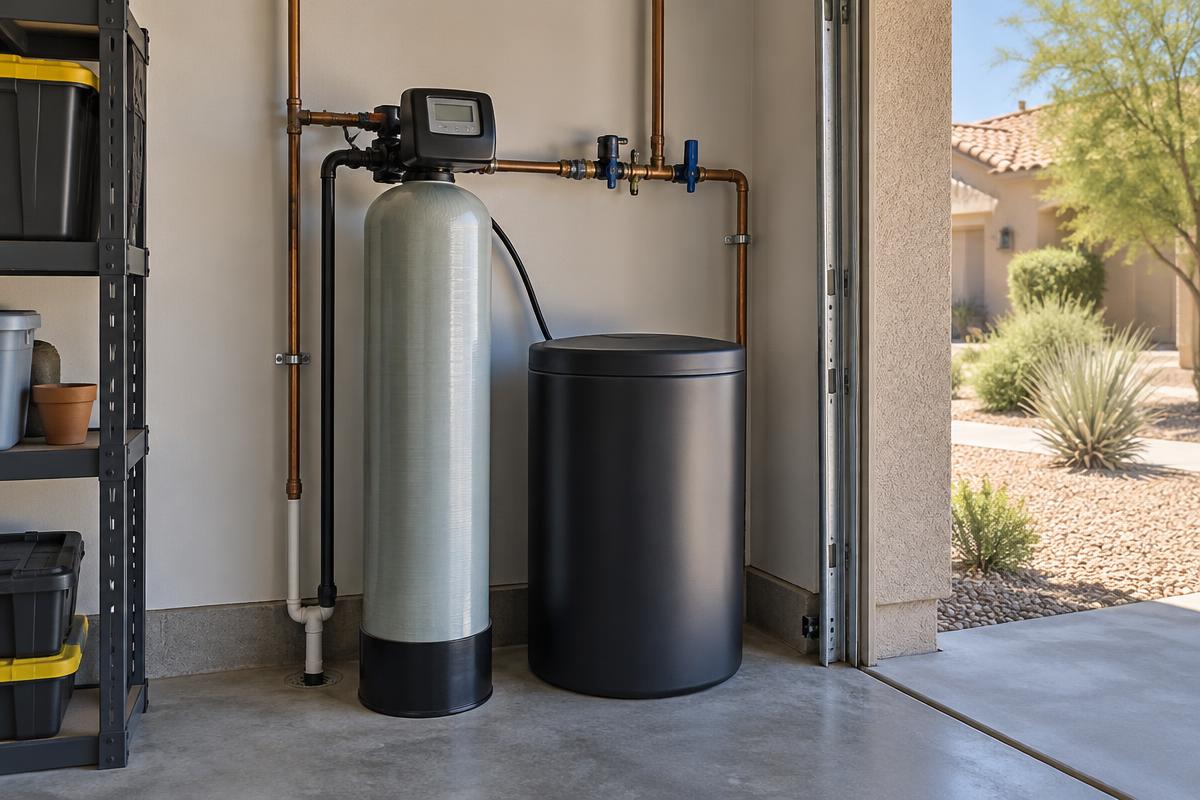
Installing a water treatment system eliminates the problems caused by Arizona groundwater. The right solution depends entirely on your specific water chemistry and household plumbing needs.
Here are the main options for treating hard water in Peoria AZ:
Taking the time to install the right system will significantly reduce the risk of plumbing damage and help maintain the long-term integrity of your home.
| System Type | How It Works | Best Use Case |
|---|---|---|
| Ion Exchange Softener | Swaps hard minerals for sodium ions | Total removal of hard water scale |
| Salt-Free Conditioner | Changes mineral structure to prevent sticking | Low maintenance scale prevention |
| Reverse Osmosis (RO) | Pushes water through a semi-permeable membrane | Purified drinking water at the kitchen sink |
Peoria Water Treatment FAQs
Is hard water safe to drink?
Yes. The calcium and magnesium in hard water are natural minerals and are perfectly safe for human consumption. The primary issue with hard water is the severe structural damage it causes to your plumbing, appliances, and fixtures over time.
How much does a water treatment system cost in Arizona?
The cost typically ranges from $1,200 to $3,500 depending on the system type, capacity, and the specific plumbing layout of your home. Traditional ion-exchange softeners usually cost less upfront, while comprehensive whole-home filtration and conditioning combos sit at the higher end of the range.
Do I need a whole-house system or just under-sink filtration?
It depends on your goal. If you only want better tasting drinking water, a single reverse osmosis system under your kitchen sink works perfectly. If you want to protect your pipes, stop soap scum buildup in showers, and extend appliance lifespans, you need a whole-house water softening system.
How long does a water softener last?
A high-quality water softener lasts 10 to 15 years with proper maintenance. Routine care involves adding salt to the brine tank and occasionally cleaning the resin bed to ensure the system continues catching hard minerals effectively.
Will a water softener remove existing scale buildup?
A water softener prevents new scale from forming, but it does not instantly remove existing buildup. Over several months, soft water slowly dissolves some of the old calcium deposits inside your pipes. However, severely clogged pipes or heavily scaled appliances usually require physical cleaning or full replacement.
Ready to Fix Your Hard Water Problems?
Stop letting harsh minerals destroy your plumbing and appliances. Pipes Plus provides expert installation for top-tier water treatment systems. Contact us today for a reliable solution in Peoria and the surrounding areas.
