
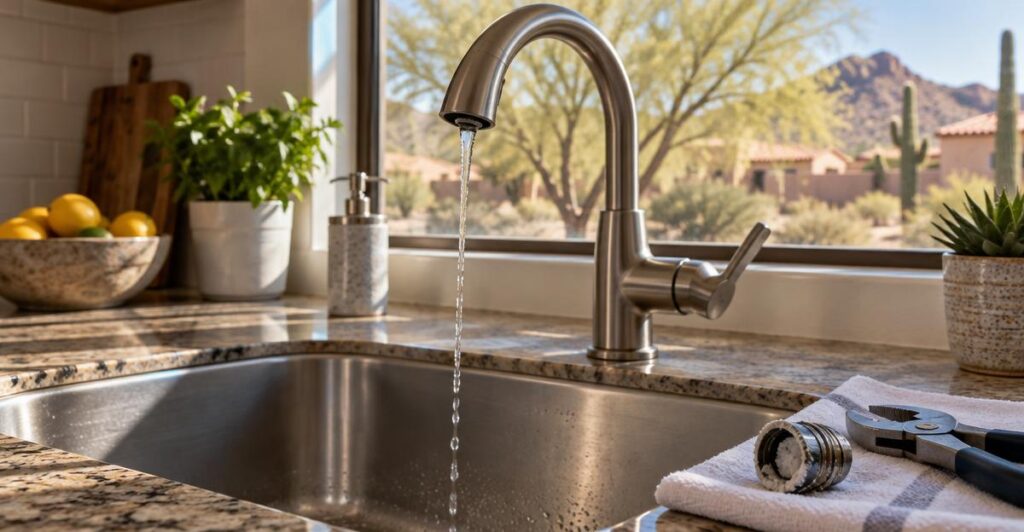
Low Water Pressure in Your Scottsdale Home: Causes and Fixes
A sudden drop in water flow turns daily tasks into frustrating chores. Diagnosing the issue correctly determines whether you need a quick hardware fix or a major system repair.
Dealing with low water pressure in your Scottsdale home slows down everything from taking a shower to running the dishwasher. High calcium levels in local water, failing valves, and hidden supply leaks are the most common culprits in the Valley. The first step to restoring normal flow is isolating the problem. You must determine if the pressure drop affects a single sink, only the hot water, or the entire property.
At Pipes Plus, we diagnose and repair residential plumbing systems directly and honestly. We help homeowners verify their pressure readings, replace failing hardware, and restore full water flow without pushing unnecessary whole-house repipes.
Isolating the Water Pressure Troubleshooting
You need to pinpoint exactly where the flow drops before attempting any repairs. Turn on the cold water at your kitchen sink, then check a bathroom faucet. If only one fixture lacks pressure, the issue is localized to that specific hardware or its dedicated supply line.
If every faucet, showerhead, and hose bib trickles, you have low water pressure in the whole house. Testing multiple locations prevents you from tearing apart a shower valve when the real problem sits at your street meter. Use these distinct checks to map your plumbing system.
Test cold and hot water at every sink and tub to determine if the drop is isolated or property-wide.
Unscrew the tip of a low-flowing faucet to look for trapped debris and hard water scale blocking the screen.
Check your exterior spigots. If they have strong pressure, the main supply is fine and the issue is inside the house.
Ask the house next door if their pressure dropped. This quickly rules out a municipal water main break.
Fixing Low Water Pressure in One Faucet
When you find low water pressure in one faucet, the fix is usually fast and inexpensive. Scottsdale has hard water packed with calcium and magnesium. These minerals build up inside narrow faucet openings and block the flow of water.
Remove the aerator from the affected sink. Soak it in white vinegar for 30 minutes, scrub it with an old toothbrush, and reinstall it. If a shower is the only problem, soak the showerhead the same way. Clogged supply lines under the sink also restrict water. Check the angle stops (the small shutoff valves on the wall) to ensure they are turned fully counterclockwise to the open position.
Replacing a clogged $5 aerator or a scaled-over showerhead cartridge often restores full pressure to a single fixture without requiring complex plumbing repairs.
Diagnosing Low Water Pressure: Scottsdale Home Diagnostics
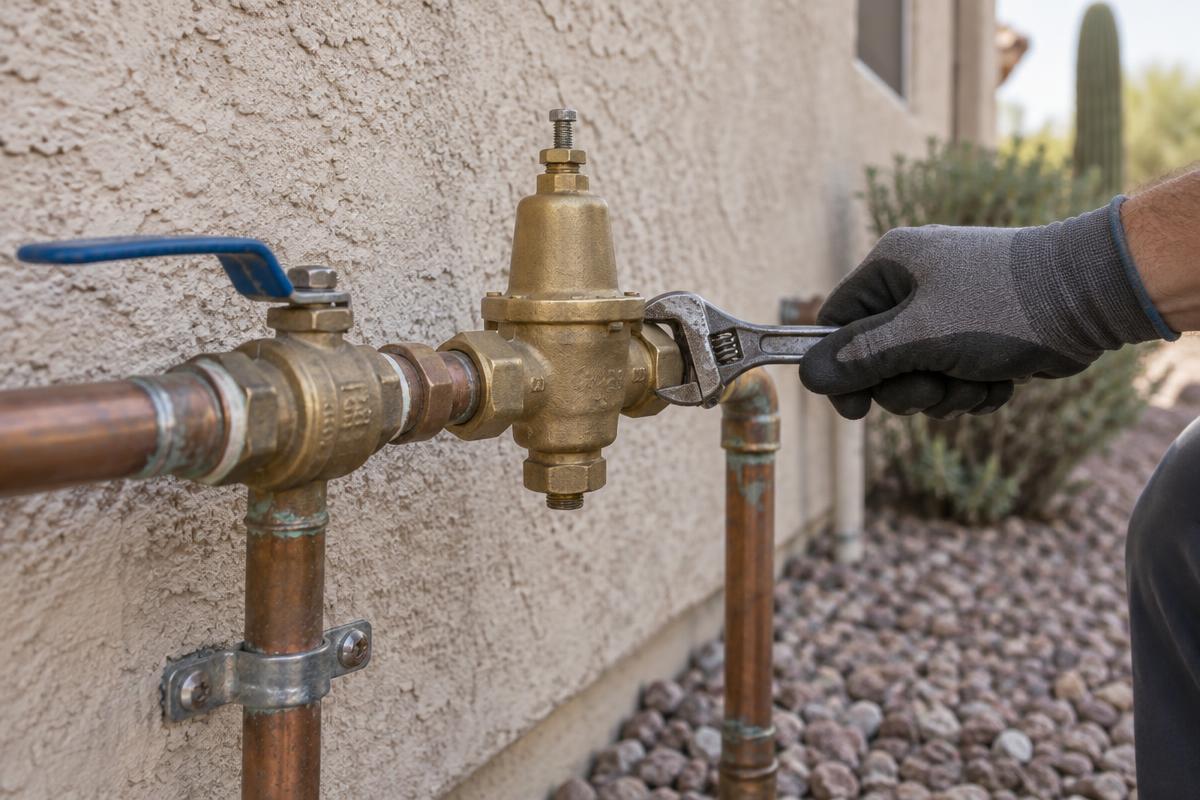
A property-wide pressure drop means the restriction sits at or near your main water shutoff. The most frequent cause is a failing Pressure Reducing Valve (PRV). The PRV regulates the high pressure coming from the city down to a safe 50 to 70 PSI for your home. When this bell-shaped brass valve wears out, it often restricts flow down to a trickle.
A professional PRV replacement typically costs between $350 and $600 depending on access. Another common cause is a partially closed main shutoff valve. Verify that the handle on your house main is completely open. If the valves function properly, you need to check for a major supply line leak. A sudden, severe drop in flow often means water is escaping underground before it ever reaches your fixtures.
Drops in Hot Water Pressure
If your cold water flows strong but the hot water barely drips, your water heater is the bottleneck. Sediment buildup at the bottom of the tank blocks the outlet pipe. Scottsdale water heaters require annual flushing to remove this abrasive scale.
A failing shutoff valve on the water heater's cold intake pipe also starves the system of pressure. Check the flex lines running in and out of the tank. Corrosion or kinks in these lines restrict flow and require immediate replacement. If the tank is heavily calcified and over ten years old, replacing the unit is often the most cost-effective fix.
How to Test Your Water Pressure
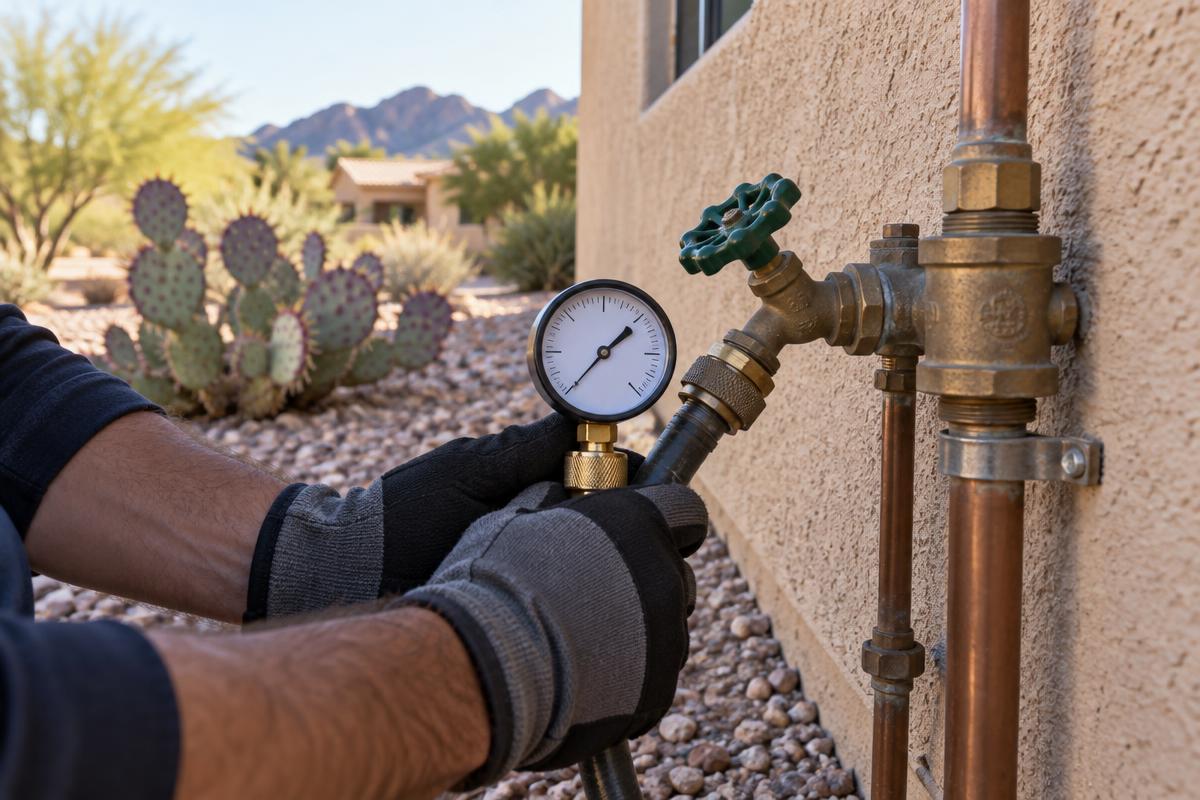
You can verify your exact pressure using a standard water pressure test gauge. Buy a gauge with a hose thread adapter for under $20 at a local hardware store. Attach it to an exterior hose bib, open the valve fully, and read the dial. Normal residential water pressure sits between 50 and 70 PSI.
Follow these steps to evaluate your system:
Taking these readings helps you clearly communicate the issue to your plumber and prevents misdiagnosis.
| Pressure Reading | Likely Cause | Recommended Action |
|---|---|---|
| Under 40 PSI | Failing PRV or major supply line leak | Call a plumber to replace the PRV or locate the leak |
| 40 to 50 PSI | Minor restriction or clogged whole-house filter | Change water filters and check main shutoff valve |
| 50 to 70 PSI | Normal pressure (issue is localized) | Clean fixture aerators and soak showerheads in vinegar |
Water Pressure Troubleshooting FAQs
Why did my home's water pressure suddenly drop?
A sudden drop is usually caused by a municipal water main break, a ruptured supply line on your property, or a failed pressure reducing valve. Check with your water provider first to see if there is a known outage in your Scottsdale neighborhood. If the city supply is fine, the problem is on your property.
Can hard water cause low water pressure?
Yes. High mineral content leaves calcium and magnesium deposits inside your pipes, fixtures, and water heater. Over time, this scale narrows the pipe diameter and blocks the fine mesh screens inside faucet aerators, heavily reducing your water flow.
How much does it cost to fix low water pressure?
The cost depends heavily on the cause. Cleaning an aerator is free. Replacing a pressure reducing valve costs between $350 and $600. If the issue stems from an underground leak or requires repiping severely corroded lines, costs range from $1,500 to over $5,000.
Is it safe to remove the flow restrictor from a showerhead?
While removing the restrictor increases flow, it voids the manufacturer warranty and raises your water bill. A better approach is soaking the showerhead in vinegar to remove mineral buildup, which usually restores pressure without altering the fixture's internal design.
Need Fast Water Pressure Repairs?
Stop dealing with weak showers and slow-filling sinks. The team at Pipes Plus accurately diagnoses pressure drops and restores full flow to your home. Contact us today to schedule a diagnostic visit and get your plumbing working right.
